
The honest truth about solo versus partnered pleasure
Honestly though, I need to start here: solo play and partnered play activate different nervous systems. Your body isn't wrong if something that works beautifully alone feels awkward with a partner. That's neurophysiology, not a relationship failure.
When you're solo, you're in control. Your nervous system stays in the parasympathetic zone (rest and digest), which is where pleasure lives. When someone else enters the room, your brain is simultaneously managing arousal, managing their presence, and managing your own self-consciousness. That's three parallel processes competing for bandwidth.
Add a lemon clitoral vibrator into a partnered scenario, and suddenly you're navigating not just pleasure, but coordination, communication, and presence with another human. Let's break down what actually changes.
Why your body responds differently with a partner present
The autonomic nervous system doesn't really distinguish between "good" and "bad" arousal. It just tracks stimulation and context. When you're alone with a lemon sucker, your body can sink into sensation. Your breathing can become irregular, your sounds can be authentic, your thighs can shake. No audience, no filter.
With a partner, even if they're supportive and kind, your nervous system is performing a constant low-level audit: "Am I taking too long? Does he think this looks weird? Should I be doing something for them? Is my body moving in ways that feel sexy to them?" That cognitive load doesn't kill pleasure, but it does delay it and often soften the edge of it.
Research on partnered sexuality shows that pressure (even self-imposed pressure) to orgasm actually suppresses the physiological cascade that leads to orgasm. When you introduce a vibrator like the Lem into a partnered session, you're adding a tool. But if that tool becomes a performance device instead of a pleasure device, it backfires.
The rhythm problem nobody talks about
Solo, you control tempo completely. You start at pattern 1, move to pattern 2, experiment with the angle, go back to pattern 1. It's fluid. You're listening to your own body with zero external input.
With a partner, rhythm becomes negotiated. They're touching you with their hands while you're using the lemon vibrator. They're moving, you're moving, the toy is vibrating. Now there are three rhythms trying to sync. If your partner's pace is slow and tender but your clitoris needs faster suction to build toward orgasm, you've got a mismatch. That's not incompatibility. It's just mechanics.
Many couples solve this by having the person with the lemon clitoral vibrator control it entirely while their partner focuses on other touches. Penetration and hand touch on your breasts or inner thighs while you control the toy's intensity and pattern. That way, you keep the solo-play autonomy you need for arousal while still experiencing the emotional intimacy and presence of partnership.
Emotional presence changes what arousal feels like
When you're alone, arousal is narcissistic in the best way. It's entirely about your sensation, your building tension, your release. That's powerful and important.
With a partner, arousal gets flavored by connection. You might notice you're wet not just from direct stimulation but from the fact that they're here, they're into this, they're watching you feel good. That's not better or worse. It's different. Some people find that emotional component makes their orgasm deeper. Others find it distracting.
I work with couples regularly who try introducing toys into partnered sex and assume it "didn't work" because the orgasm felt different. Different isn't failure. But the shift is real. With a lemon vibrator, you might orgasm faster solo. With a partner present, you might take longer, but the orgasm might feel fuller because there's intimacy underneath it.
The self-consciousness factor is huge
Let's name this directly. Many people feel awkward using a vibrator in front of a partner the first time. The sound is loud. The toy is visible. You can't pretend it's not there. Some partners get it immediately and find it hot. Others need a moment. And some people using the vibrator feel vulnerable in ways they don't when they're alone.
Self-consciousness literally contracts the pelvic floor. A tight pelvic floor makes it harder for the lemon sucker's suction to work effectively. So yes, you might actually take longer to orgasm with a partner present, and that's partly because your body is less relaxed, not because the toy isn't working.
The solution is building explicit permission. "I need a minute to just feel this without talking." Or "I'm going to warm up alone for five minutes, then you can join." Or "I want to use the toy during foreplay, but if I seem distracted, it's not about you." Naming the dynamics takes the shame out of the experience.
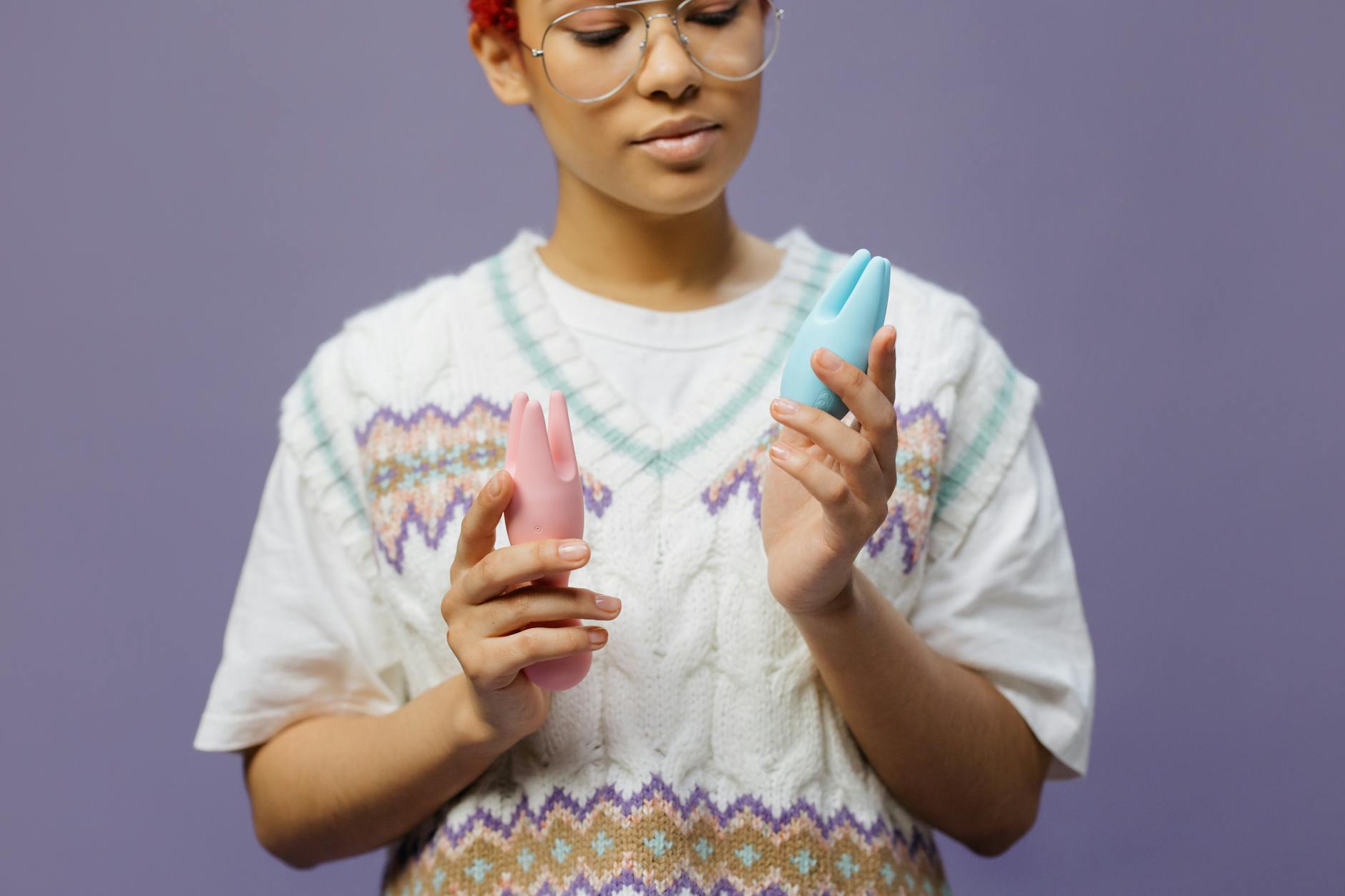
When partnered play actually enhances the lemon vibrator experience
That said, there are real advantages to using a lemon clitoral vibrator with a partner. Penetration combined with external suction tends to create a different quality of orgasm for some people. Not necessarily "better," but layered. The internal sensation plus the external stimulation creates a compound feeling.
Also, the anticipation changes things. If your partner is building you up with touch and attention, your body might be more ready for the lemon vibrator when it finally arrives. Your clitoris might be more engorged, more sensitive, more responsive. That's not guaranteed, but it's common.
And honestly, there's something to shared vulnerability. When you're using a toy with someone, you're essentially saying, "Here's what I need for my pleasure." That's intimate. That's real. Some couples find that using tools together actually deepens trust because they're being explicit about pleasure instead of vague about it.
Communication is the actual differentiator
The biggest shift between solo and partnered vibrator use is information flow. Alone, you don't need to communicate anything. With a partner, you're trading constant feedback.
Good frameworks: "Lighter touch on my breast while I control the toy." Or "I want to go slow for a bit." Or "I can't come like this, and that's okay, I just want to feel good." These aren't sexy statements, but they transform the experience because both people are working with actual data instead of assumptions.
Many people avoid this conversation because they think it kills the mood. In my experience, it does the opposite. When both partners know what's actually happening, the nervous systems relax. You can take your time. You can try variations. You can laugh if something feels awkward. You can keep going if something feels amazing.
Practical adjustments for shared sessions
A few concrete things I recommend: First, the person using the lemon vibrator should have control. Their partner can initiate contact, but the person with the toy needs to manage intensity and pattern. Second, use water-based lubricant. It makes everything feel smoother and reduces friction noise, which helps with the self-consciousness piece. Third, warm up together before the toy comes out. Let your body and your partner's body merge a bit first.
For the Lem specifically, the suction mechanism works best when there's not a lot of competing stimulation right at the clitoral head. So if your partner wants to be involved, have them focus on your inner thighs, your breasts, your neck, your hands. Let the toy have the clitoris.
One more thing: some people find it helpful to use the vibrator solo first, then introduce a partner later. You get to know how your body actually responds to it without the extra cognitive load. Then when you bring a partner in, you're not also learning the toy. You're just learning the new rhythm.
People Also Ask
Why does a lemon vibrator feel less intense with a partner present?
Your nervous system processes multiple stimuli simultaneously. With a partner present, some of your brain's attention is managing their presence, your own self-awareness, and emotional cues instead of being fully devoted to physical sensation. That's not a malfunction. It's context-dependent arousal. Many people find the orgasm is different, not weaker, just oriented around connection rather than pure sensation.
Can you use a lemon clitoral vibrator during partnered penetrative sex?
Yes, and many people do. The vibrator stimulates the clitoris externally while penetration happens internally, which creates a compound sensation. The key is clear communication about rhythm and the person using the toy staying in control of the intensity. The partner should focus on steady, slower penetration while the toy user manages the clitoral stimulation.
Should I hide my vibrator use from my partner?
No. Secrecy creates distance. If you're using a lemon vibrator alone and want to keep it private, that's your choice. But if you're hiding it because you think your partner will judge you or you feel shame about your pleasure, that's worth addressing. Partners who love you want you to feel good. The conversation might be awkward for thirty seconds, then it's over.
Does using a lemon sucker during partnered sex mean something is wrong with our intimacy?
Absolutely not. Introducing a tool doesn't mean the relationship is failing. It means you're being curious and intentional about pleasure. Some of the couples with the strongest intimacy are the ones who aren't afraid to say, "Let's try this" and actually experiment together.
What if my partner feels threatened by my vibrator use?
That's a different conversation, and it's worth having directly. Sometimes partners worry the toy means they're not enough. But a vibrator and a human provide entirely different things. You can't replace a person with a toy, and toys can't replace a person. They do different jobs. A conversation with your partner about what the vibrator actually provides (consistent stimulation, specific sensation, pleasure independence) often helps. If the discomfort persists, a couples therapist can help navigate it without judgment.
How do you even bring up using a lemon vibrator with a partner for the first time?
Start simple. "I've been thinking about trying something new," or "I read about these toys that work differently than what I've tried before." If your relationship has good communication, frame it as curiosity, not criticism. If you're nervous, you could show them a Lem Nancy's Shop product page and say, "I'm interested in trying this. What do you think?" Most partners will surprise you with openness. And if they don't immediately, give them time to sit with the idea. Big shifts take a moment.
The real difference
Solo versus partnered vibrator use isn't better or worse. It's different nervous system activation, different cognitive load, different emotional context. Knowing that your body might respond differently with a partner present means you can stop blaming yourself or the tool. You can just work with what's actually happening and adjust accordingly.
Your pleasure matters. That's true alone and together. The lemon clitoral vibrator is just a tool that helps you access it. How you use that tool, and with whom, is entirely your call.